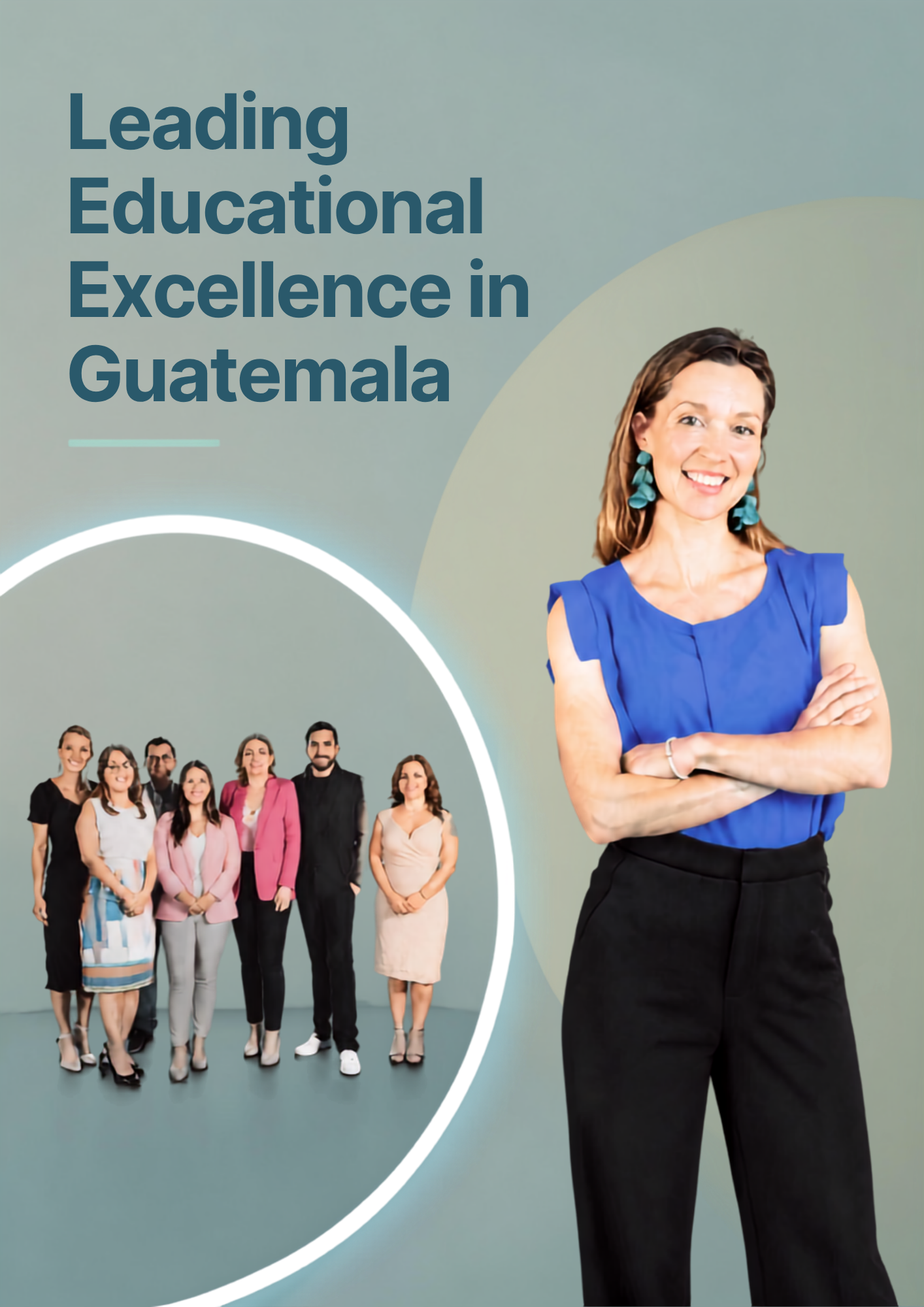
Julianne, could you start by telling us a little about your own journey? What brought you to Guatemala and ultimately to your current leadership role with the Luis von Ahn Foundation? How has your experience at HGSE influenced the work you do today?
HGSE is quite literally the reason I ended up in Guatemala. I came to HGSE after working as a bilingual teacher in Texas and New Jersey and graduated from the School Leadership Program in 2017. I met my partner there, and a few years later moved to Guatemala to join him and work with an education nonprofit supporting teachers and instructional coaches in the western highlands.
I spent five years in that role, and it was where I really began to understand Guatemala—not only the deep inequities within the education system, but also the incredible talent, commitment, and ingenuity that exist in communities across the country. That experience continues to shape how I approach philanthropy today.
In 2024, I joined the Luis von Ahn Foundation as Director of Education and later that year stepped into the Executive Director role. I was drawn to philanthropy because it sits at such an interesting intersection of research, practice, and partnership: we can learn from evidence, listen to people doing the work, bring different actors together, and use our resources to help good ideas grow.
HGSE has influenced nearly every stage of that journey. I still return to what I learned there—from Paola Uccelli’s work on bilingualism and biliteracy to thinking about how budgets reflect institutional priorities. When I became Interim Executive Director, I even pulled out my HGSE materials on approaching the first 90 days in a new leadership role.
More than anything, HGSE shaped how I think about leadership: as something rooted in learning, listening, and creating the conditions for other people to succeed.
For readers who may not be familiar with the Luis von Ahn Foundation, could you tell us about its mission and the change it hopes to contribute to in Guatemala?
The Luis von Ahn Foundation is a relatively young private foundation, established in 2021 by Luis von Ahn, the Guatemalan entrepreneur and computer scientist who co-founded Duolingo and created reCAPTCHA. Luis grew up in Guatemala, and the Foundation reflects his desire to invest back in the country and expand opportunities for Guatemalans.
Since its founding, the Foundation has supported organizations working in Guatemala across four areas: education, women’s and girls’ equality, democracy and citizen participation, and nature conservation. At the heart of that work is a belief in locally rooted knowledge and leadership. We try to approach philanthropy with the understanding that those closest to the challenges often have the deepest understanding of the context and of what meaningful change requires.
We're now entering a new chapter as a Foundation, building on what we've learned during these first years and focusing more intentionally on leadership and opportunity. Ultimately, the question we're asking is: How can we help more Guatemalans—particularly those who have historically had less access to education, networks, resources, and positions of influence—have the opportunity to develop their talents and contribute to the future of the country?
You mentioned that the Foundation is developing a new strategy focused on youth leadership and on creating pathways from secondary school through university and into leadership opportunities. What is driving this new direction, and what do you hope it will make possible for young people in Guatemala?
Guatemala is an incredibly young country, and everywhere we look we see talented young people with ideas, ambition, and a deep desire to contribute to their communities. But talent is widely distributed; opportunity is not.
That is really what is driving this next chapter of our work. Through our education portfolio and conversations with our partners and young people themselves, we’ve seen how access to education, networks, mentorship, and opportunities can shape a young person’s trajectory—and how unevenly those opportunities are distributed, particularly for young people who have historically been underrepresented in higher education and positions of influence.
As we develop our new strategy, we’re thinking about leadership as a pathway. Education is an important part of that pathway, but it’s not the whole story. We’re interested in how young people move from secondary school into higher education and then into experiences, relationships, and opportunities that allow them to develop their potential and contribute to their communities and country.
We’re also approaching this next chapter with a learning mindset. We want to listen to young people and organizations already doing this work, test ideas, learn what makes a difference, and share those lessons with others.
Ultimately, we hope to see more young people from across Guatemala able to imagine themselves as leaders—and, more importantly, have meaningful opportunities to lead and shape the country’s future.
One of the Foundation’s flagship initiatives is the Premio Visionario. What inspired the Premio, and what does it seek to recognize and celebrate about leadership in Guatemala? Are there any stories or examples from the Premio that particularly illustrate its impact?
The Premio came from a very simple idea: we wanted to poner en alto a Guatemala—to celebrate Guatemalans doing extraordinary things and tell stories about the country through the people who are helping build its future.
We are now in the third edition, and what has struck me is the incredible diversity of leadership that exists here. Our winners have come from fields ranging from education and public health to film, Indigenous rights, entrepreneurship, and community leadership. The common thread isn't a particular profession or title. It's integrity, vision, demonstrated impact, and a commitment to making Guatemala better.
One of my favorite moments is actually seeing the winners together. At last year's celebration, we had this remarkable group of people in one room, many of whom might never otherwise have crossed paths. You could immediately see conversations and ideas emerging organically. It made us realize that the opportunity isn't only to recognize individual leaders; it's also to connect them.
As we move into our new strategy, that's something we're especially excited about. How might previous Premio winners become mentors to emerging leaders? How might leaders from completely different fields learn from one another? How can the Premio become not just an annual recognition, but a growing community of people invested in Guatemala's future?
Looking ahead, what gives you the most hope or excitement about the next generation of leaders in Guatemala, and about the role education can play in shaping the country’s future?
What gives me hope is the amount of talent, creativity, and determination we see across Guatemala. There are so many young people with ideas about how they want to contribute to their communities and to the country.
Luis has spoken often about an important tension: education does not automatically reduce inequality. When high-quality education is concentrated among those who already have access to opportunity, it can reinforce existing gaps. That makes the question of who gets access—and what opportunities come with it—especially important.
That idea resonates strongly with where we are headed as a Foundation. We want more young people who might not otherwise have those opportunities to be able to continue their education, build relationships and networks, and put their talents to work.
And none of us can do that alone. I’m excited by the possibility of working across schools, universities, nonprofits, funders, employers, and young people themselves to create more of those opportunities. There is already tremendous talent in Guatemala. The question is how we make sure more people have a real chance to develop it and use it.
Learn more at: https://www.luisvonahnfoundation.org/