Question: Your book develops the idea of “individual and collective responsible ethical orientations.” How does a person build that orientation over time, and what role do organizations and communities play in shaping it, for better or worse? A short example from one of your case studies would help readers see it in practice.
In Navigating Dilemmas (2026), I introduce the Ethical Orientations and Processes (EOPs) model to explain how individual and collective responsible ethical orientations shape everyday decision-making amid power, influence, and contemporary systemic challenges. I define an ethical orientation not merely as a fixed adherence to specific rules, but as a proactive, reflective process to recognize ethical undercurrents, develop awareness, and engage in collective sense-making (not commonsense). According to this framework, an individual constructs a responsible ethical orientation dynamically over time through several mechanisms:
• Developing Proactive Awareness: Individuals shift from reactive decision-making to a "proactive ethical orientation," learning to anticipate and actively monitor emerging systemic and technological dilemmas before they escalate.
• Critical Reflection on Power: Over time, a person develops an understanding of how their own identity intersects with structural power relations, enabling them to question dominant societal narratives.
• Resisting Behavioral Formatting: Building this orientation requires conscious effort to resist "behaviorism" and technological narratives of power that attempt to standardize human sense-making and ethical responses.
• Empowering Personal Identity: Growth involves cultivating an "empowered identity," which gives an individual the internal leverage needed to voice dissent and actively push back against ideological conformity.
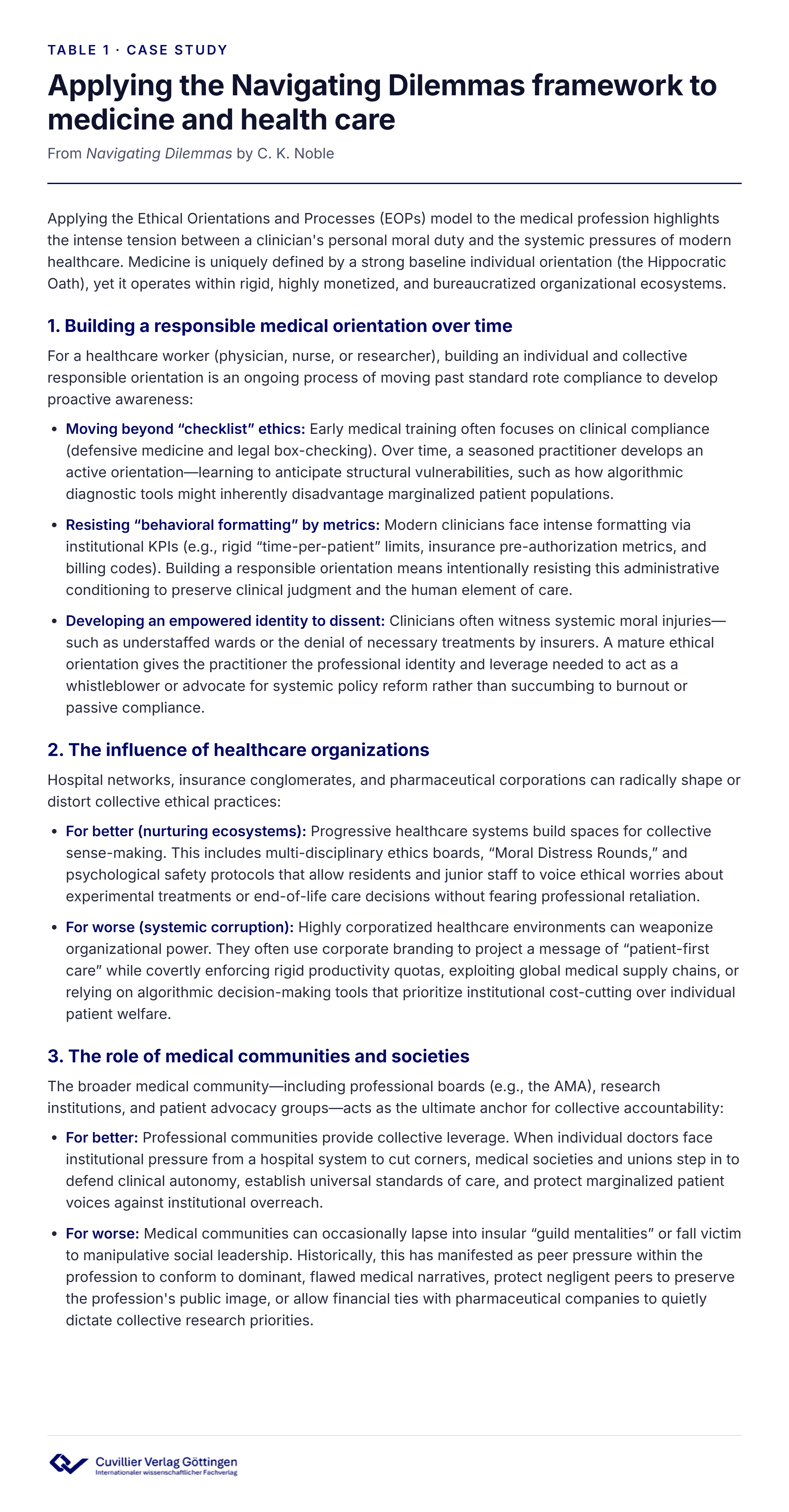
Table 1 includes a medical case overview.
Ultimately, my arguments contend that achieving a “proactive” responsible orientation requires individuals and groups to move beyond compliance, instead building active, collaborative processes to constantly re-evaluate how power and influence dictate whose interests count.
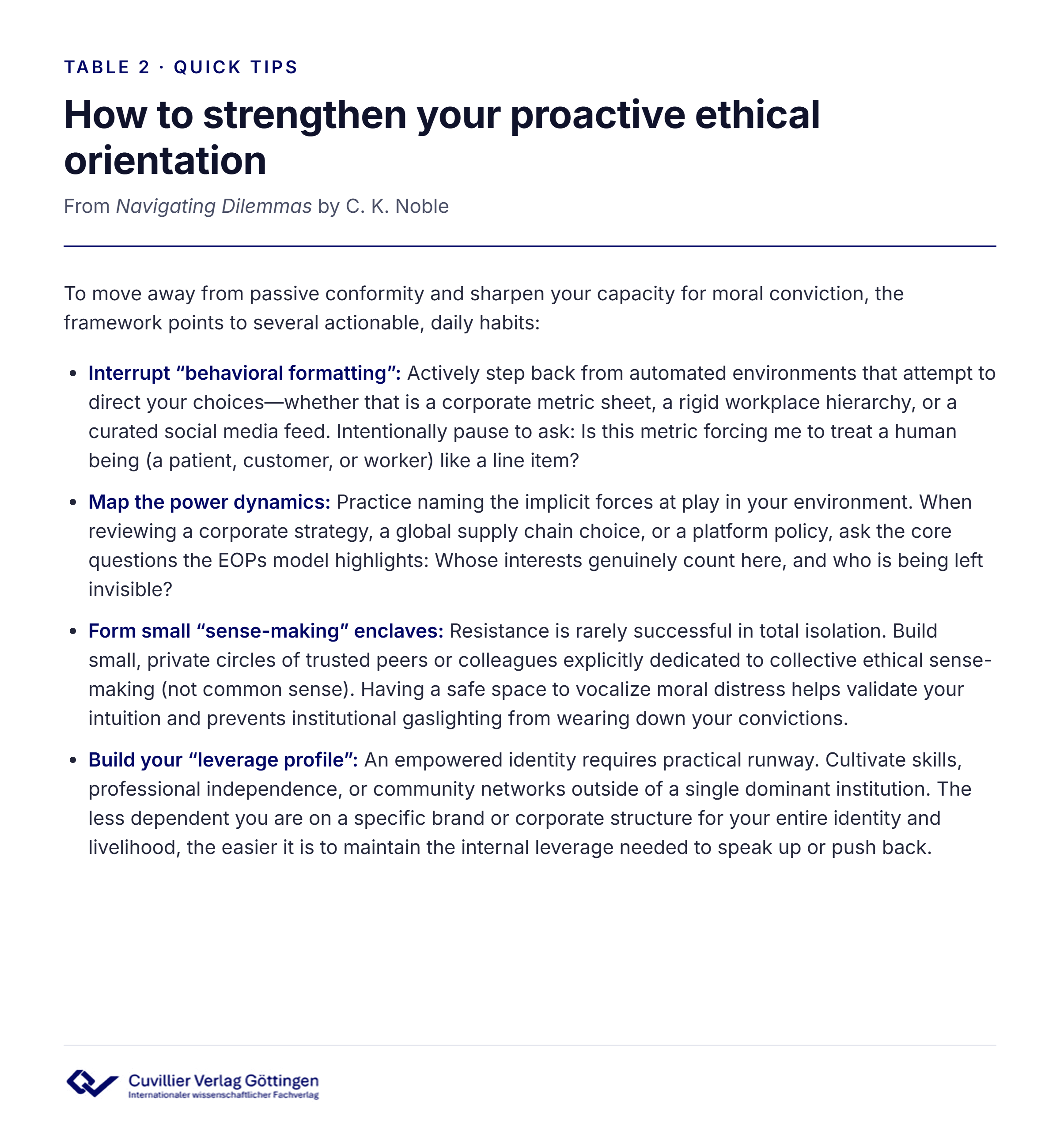
Question: The book looks at how people slide between conformity and resistance, whether that’s under pressure from a brand, a social media feed or a global supply chain. What separates someone who resists out of real moral conviction from someone who simply goes along? And what can readers do to strengthen that capacity in themselves?
The book explores the blurry boundary between passive conformity and conscious resistance. Whether an individual is navigating corporate brand optics, algorithmic social media feeds, or complex global supply chains, I highlight that "behavioral formatting" continuously pushes people to prioritize institutional or social convenience over real moral clarity.
What Separates the Resister from the Conformer? I argue that the fundamental divider between someone acting out of deep moral conviction and someone who simply "goes along" comes down to two primary elements within the EOPs framework:
1. An "Empowered Identity" vs. a Formatted Self Conformers allow their sense-making to be outsourced to dominant external systems.
When pressured by a brand or an algorithmic algorithm, they slide into behaviorism—treating systemic standards as absolute. By contrast, resisters possess an empowered identity. Their internal moral compass is independent of institutional validation, allowing them to perceive the gap between an organization’s idealized public branding and its raw systemic impacts.
2. Proactive Ethical Orientation vs. Reactive Compliance Those who conform typically operate in a mode of reactive compliance, stepping in to assess ethics only when a formal policy boundary is visibly broken. Real conviction relies on a proactive ethical orientation. This is an active, anticipatory awareness that interrogates hidden power dynamics and systemic inequalities before they mature into an explicit crisis.
3. The Rejection of "Social Leadership" Traps Along the book I note that modern conformity is often weaponized through manipulative "social leadership" and cultural peer pressure. A conformer adapts to preserve social capital or smooth over immediate friction. A resister recognizes whose interests are actually being served by that peace, choosing to accept the personal or professional cost of non-conformity.